
Eat Your Way To Fertility: Print + Digital
The evidence-based fertility cookbook, written by an Accredited Practising Dietitian.
- 248 pages · 85+ recipes
- Affirmation cards included
- Dispatched in 1–2 business days
Recipes85+
Nutrition guide50 pages
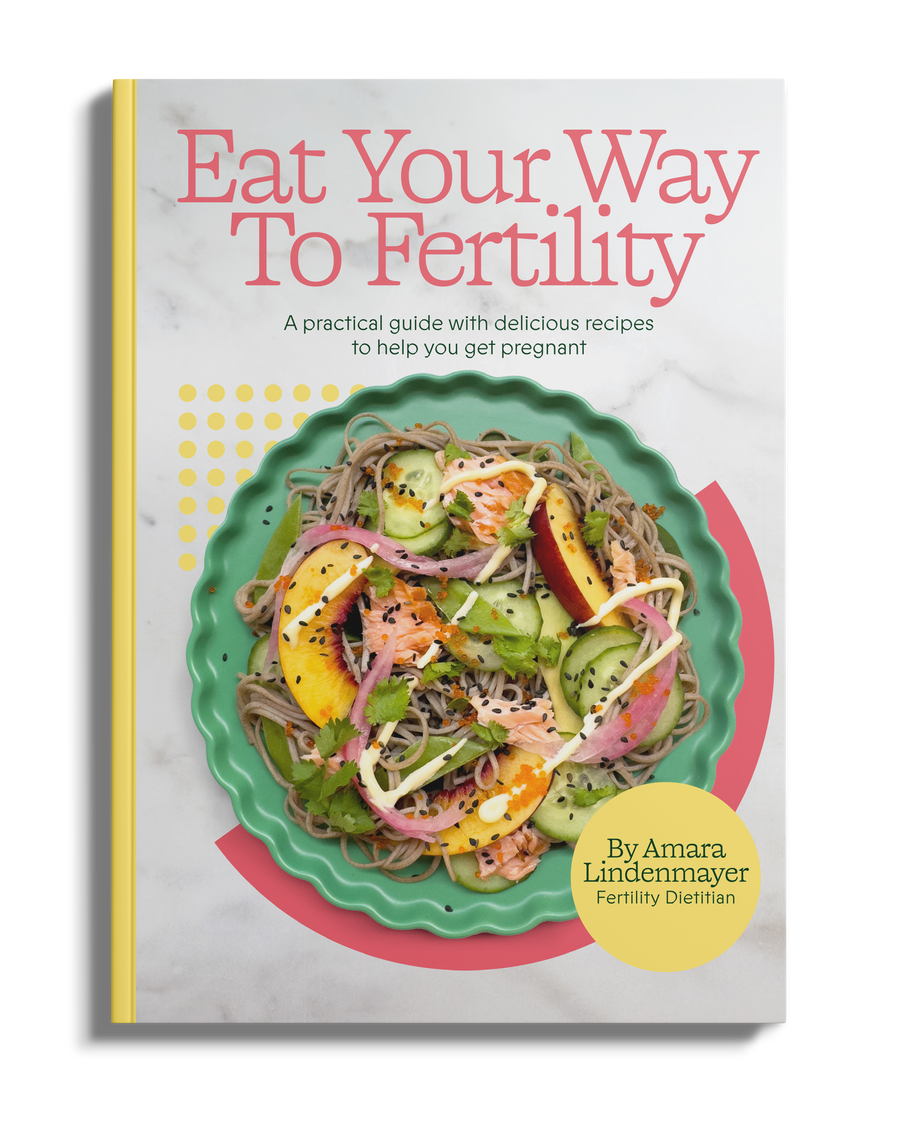
Extent248pp flexibound
IncludedAffirmation cards
ISBN978-1-7637393-0-7
Free shipping in Singapore and Australia. $20 flat rate everywhere else
The printed book to cook from, and the digital edition to carry. $88 for both, $28 less than buying them separately.
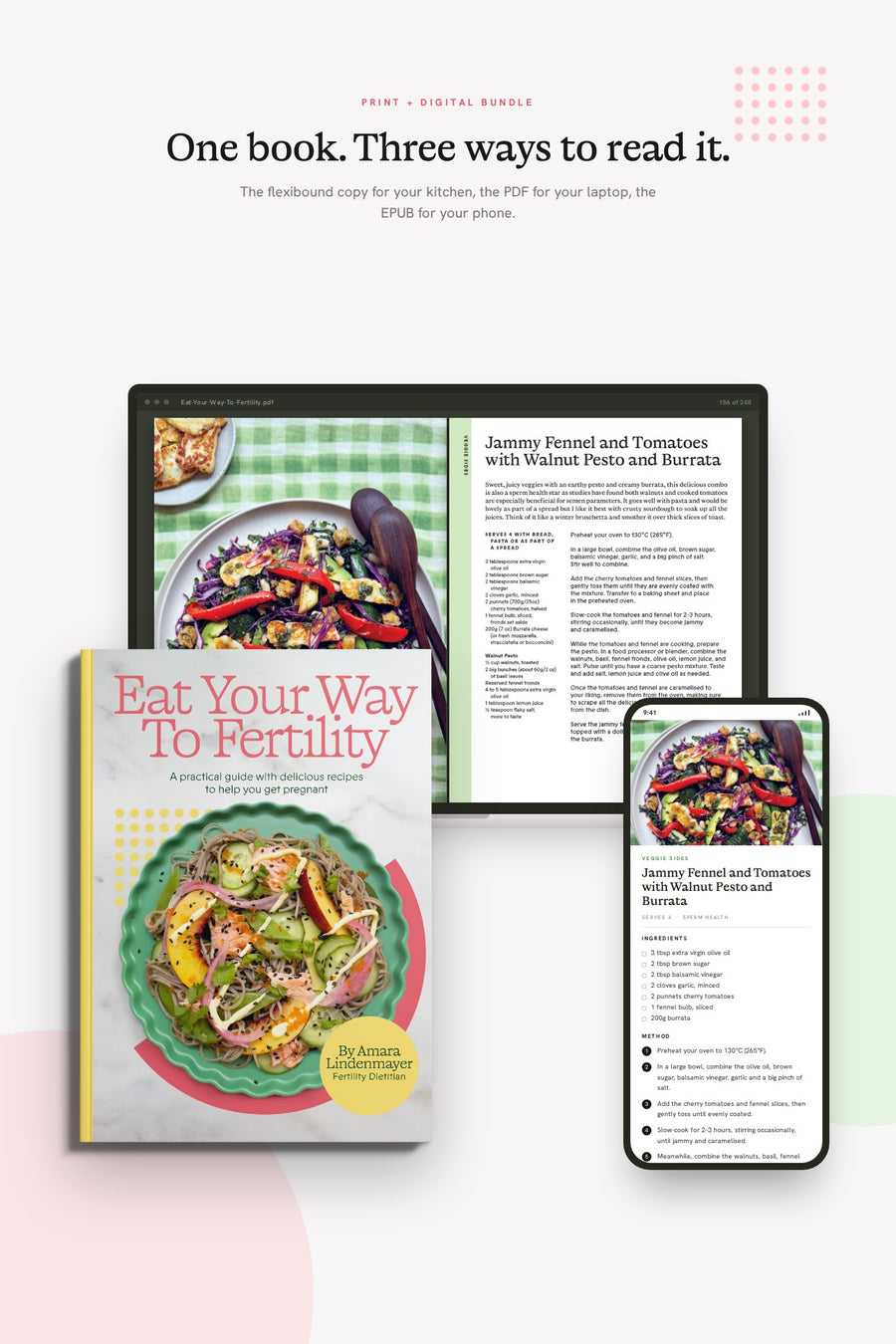
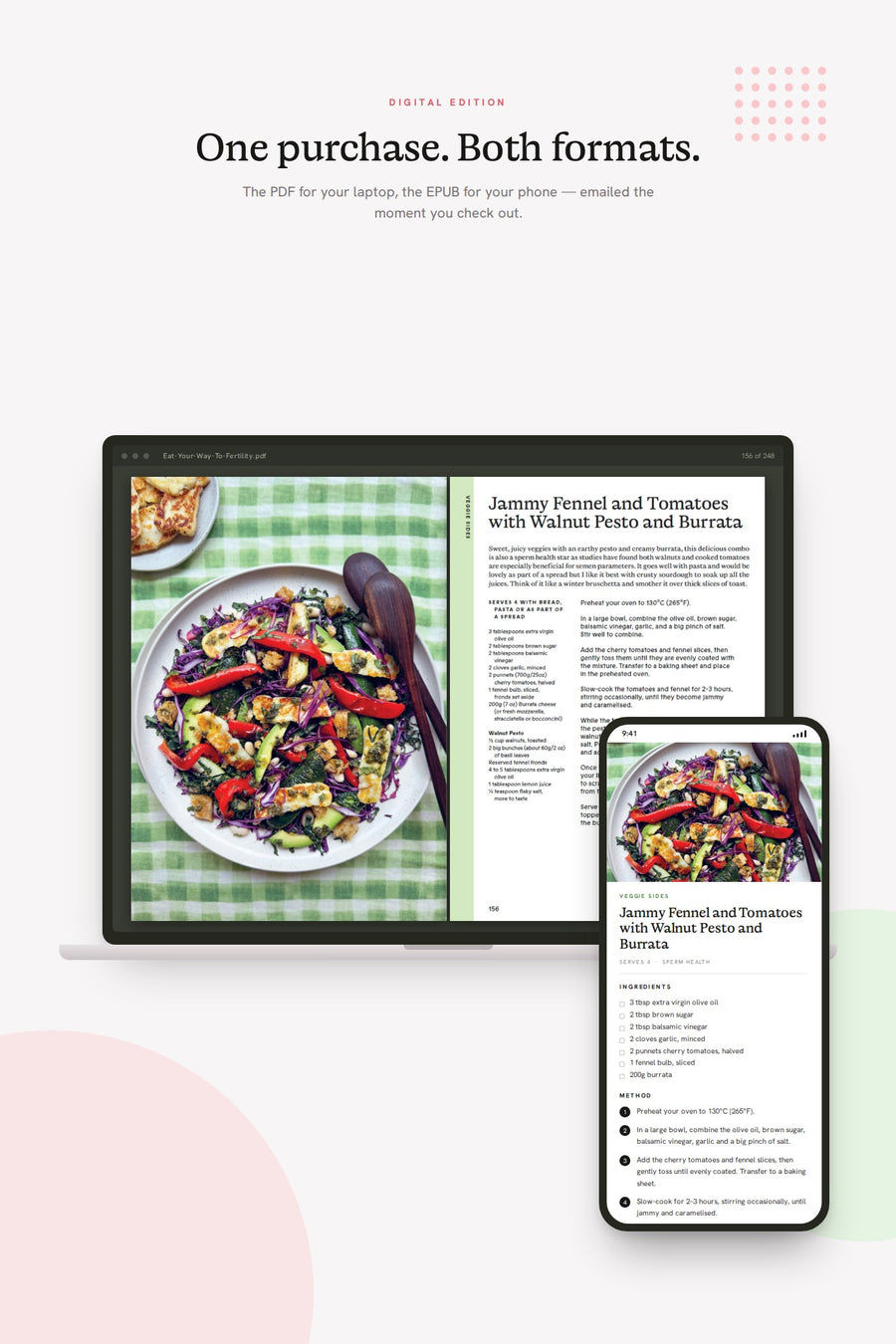
The print copy lives in your kitchen. It’s flexibound, so it lies flat next to the chopping board instead of snapping shut halfway through a method. The digital edition lives in your pocket: the EPUB on your phone at the supermarket, the PDF on your laptop when you want to sit down and read the science properly. Same book, in whichever format suits wherever you happen to be standing.
What you get
- Eat Your Way To Fertility in print, 248 pages, flexibound
- A set of affirmation cards
- The EPUB, built for reading on a phone
- The PDF, the designed book exactly as it’s printed
The digital files are available the minute you hit buy so you don’t have to wait for the post to start reading.
What’s inside
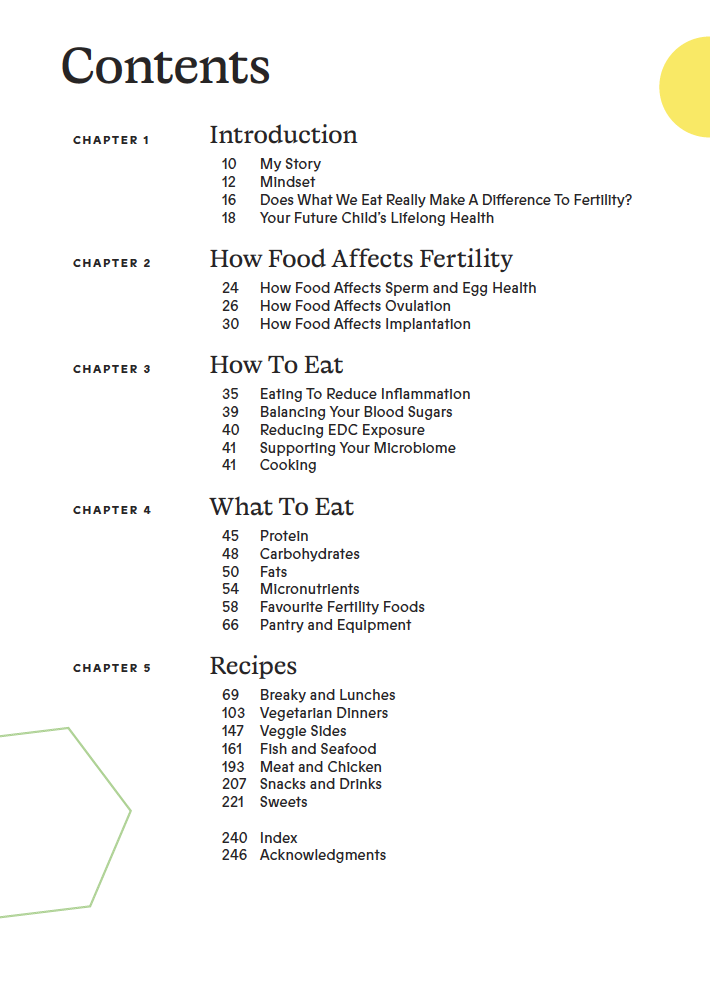
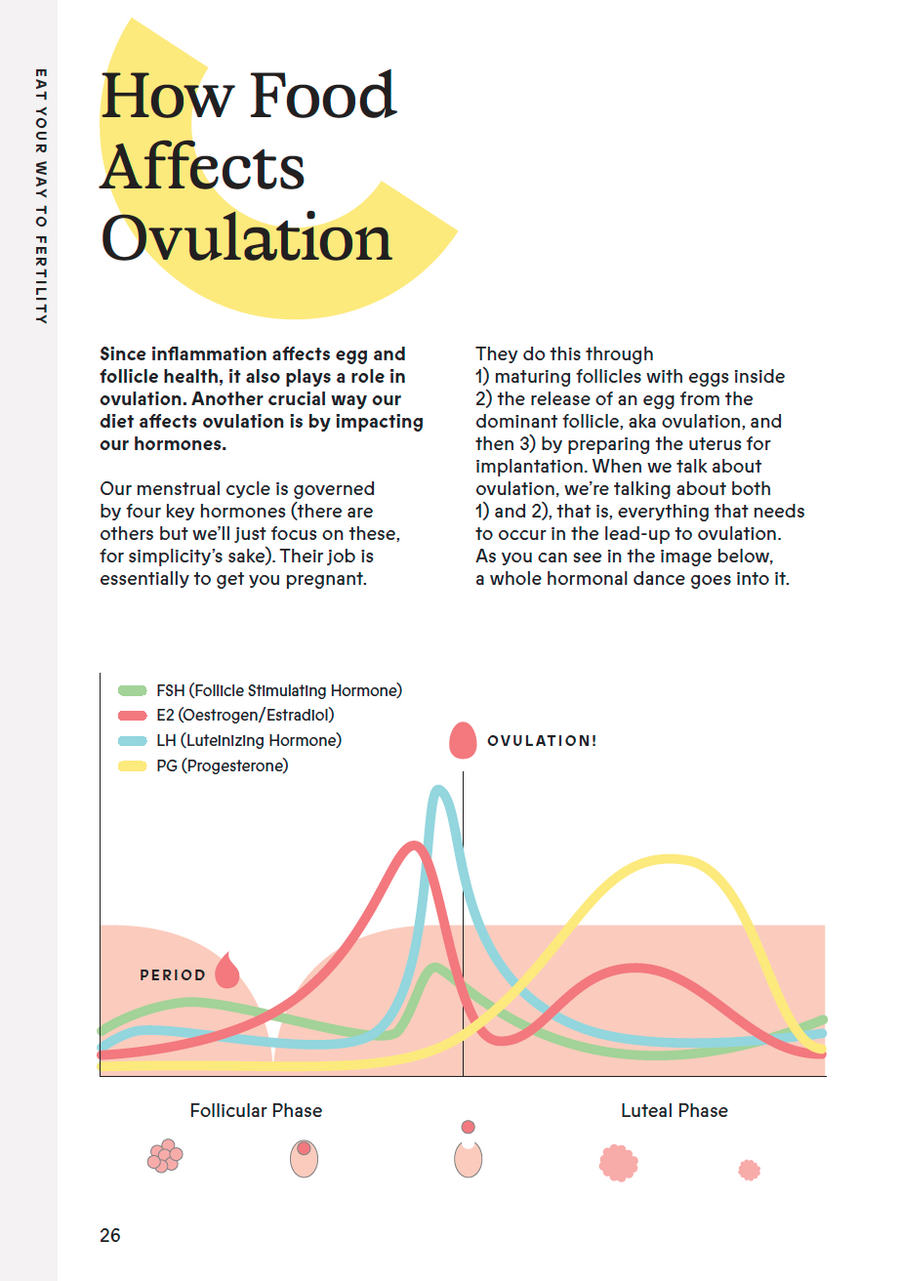
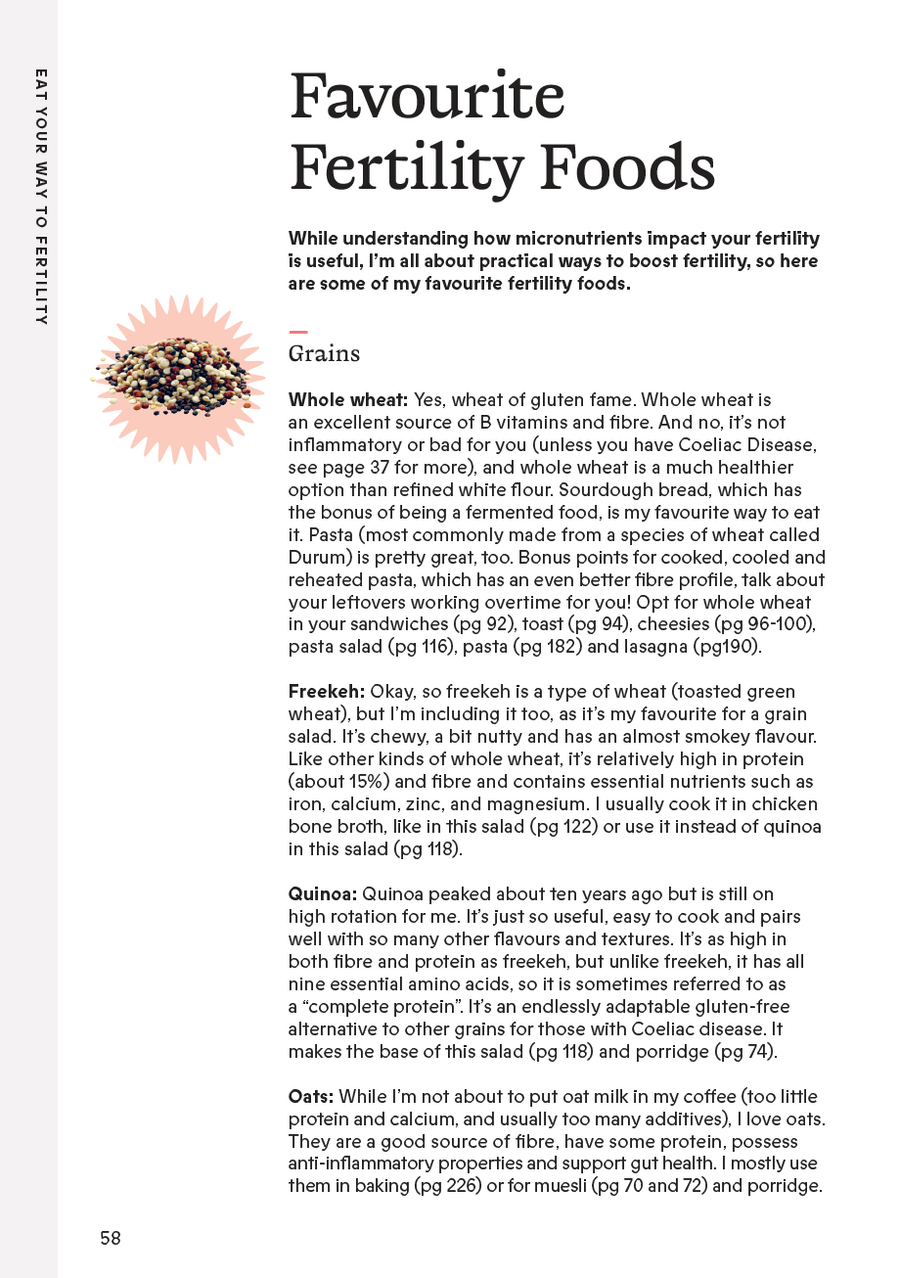
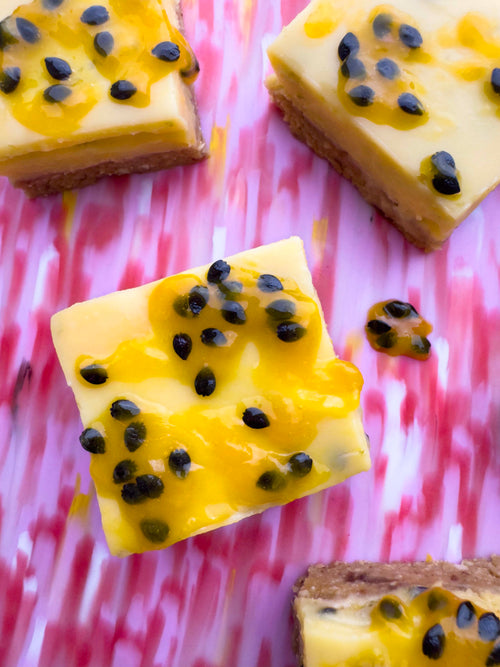
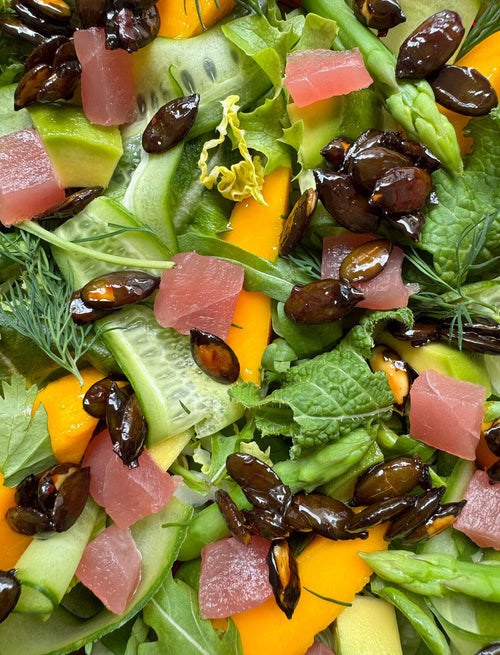
The first half is a 50-page guide to what the research actually says about food and fertility, egg quality, sperm health, ovulation, implantation. The second half is 85+ recipes. Delicious meals built around the foods with the strongest evidence behind them.
It isn’t about restriction. It’s about small tweaks that make a real difference.
Will it suit how I eat?
Most likely, yes. Of the 85+ recipes:
- 70 are pescatarian
- 66 are gluten-free
- 56 are vegetarian
- 26 are vegan
And the guide half works whatever your dietary requirements are, because it gives you the principles rather than a fixed meal plan.
Who it’s for
You’re trying to conceive, and you’d rather understand why than be handed another list of foods to cut out. Maybe you’ve got PCOS or endo. Maybe you’re getting ready for IVF. Maybe you’ve just been told to “just relax” one too many times and would rather take back some control.
Does it work if I have PCOS?
Yes, and it’s one of the reasons I wrote it. Most people with PCOS have some degree of insulin resistance, and a lot of this book is about eating in a way that keeps blood sugar steady without cutting out food groups.
Does diet matter if I’m doing IVF?
Yes, and plenty of my readers are. A lot of the research in this book actually comes from IVF studies. Diet has been linked to egg and embryo quality, endometrial thickness and live birth rates in people going through treatment, and your partner’s diet affects sperm DNA regardless of which route you’re on. None of it replaces your clinic’s protocol, it sits alongside it.
What it isn’t
It isn’t a diet. There’s no elimination phase, no cupboard full of supplements, and nothing in here promises you a baby. Food can have a big impact on fertility but it isn’t a silver bullet.
Shipping
Free within Singapore and Australia. I hold stock in both, so it ships domestically. Singapore usually lands in 2 to 3 days, Australia within 3 to 5 business days. Everywhere else is a flat $20 by courier from Singapore, usually under a week. Either way, the files arrive straight away.
Digital
Your copy is personalised with your name and email. It’s yours to read on every device you own, I’d just ask that it stays yours.
Why you can trust it
I’m Ami. I spent years trying to conceive, being an Accredited Practising Dietitian, I went straight to the science. And then spent the next few years learning everything I could about fertility nutrition. And then I put all that together and I wrote the book I needed while TTC.
Look inside
Common questions
Fertility nutrition, answered
Does diet actually affect fertility?
Yes, and I'll be honest about how much. Nothing you eat will override a blocked tube or a sperm issue. What diet does affect is ovulation, cycle regularity and egg quality, mostly through blood sugar and insulin. That's a real lever — and it's one of the very few in this whole process you get to pull yourself.
Do I need to cut out dairy, gluten or soy while trying to conceive?
Almost certainly not. Unless you have coeliac disease or a diagnosed intolerance, there's no good evidence that cutting dairy, gluten or soy helps you conceive. Soy is the one I'm asked about most, and the fear largely traces back to a misreading of some very old animal studies — moderate whole-food soy is fine. What cutting things out reliably does is shrink the variety in your diet, which is the opposite of what fertility nutrition is about.
What should a fertility supplement contain?
Folate, in an active form, ideally started a few months before you're trying. That one is genuinely well supported. After that the evidence gets much thinner than the marketing does, and I've read a lot of labels charging a lot of money for ingredients doing very little. If you want the whole checklist, the free guide walks through the six things I'd look for before you spend anything.
How long does it usually take to conceive?
For couples under 35 with nothing else going on, around half conceive within six months and roughly 80% within a year. Age shifts that more than any other single factor. The number I'd actually hold onto: if you're under 35 and it's been twelve months, or over 35 and it's been six, that's the point to get investigated rather than keep waiting.
Is this book suitable if I'm doing IVF?
Yes, and plenty of my readers are. Egg quality and metabolic health matter whichever route you're on — naturally, IUI or IVF. The book sits alongside your clinic's protocol rather than replacing any part of it, and there's nothing in it designed to conflict with treatment. If you're mid-cycle and unsure about something specific, check with your specialist.
What size is the book, and what format?
It's flexibound — a hybrid between a paperback and a hardcover, so it lies flat on the bench while you cook. 248 pages, roughly 17 by 24 centimetres. ISBN 978-1-7637393-0-7.
Where does it ship, and how long does it take?
Everywhere. I keep stock in Singapore and Australia, so orders in those two countries ship domestically — free, and fast. Singapore usually lands in 2–3 days via SingPost, Australia within 3–5 business days. Everywhere else is a flat $20 by courier from Singapore, usually under a week. No calculator, no nasty surprise at the last step.
Will I be charged customs or duties?
Usually not. Most countries — including Australia, the US, the UK and New Zealand — don't charge duty on books. A few, notably the EU and Canada, may apply VAT or a handling fee on import. Those are set by your country rather than by me, and they'd be payable by you.
What readers say
From people who've cooked from it
You’ve put it very succinctly, like a systematic review. Oh man — you’ve really got me craving salads now.
Kristen, Singapore
It’s informative but also has a really positive and hopeful undercurrent. I can see it being something I lend to family and friends in the future as they embark on their TTC journeys.
Jessica, Melbourne
We’ve just sat down and read through everything together — your research is incredible. Consensus is that we’re doing very well already, but we’re upping nuts and seeds and fermented foods.
Faye, Singapore